


Hidden water damage in your house can be expensive and destructive. Unfortunately, this type of damage usually isn’t discovered or addressed until it becomes very serious, so if you want to save money on repairing water damage to your home, you will need to be proactive in keeping a lookout for these damaging signs.
The humid climate in Orlando is particularly conducive to the rapid spread of moisture problems, but once you detect these warning signs early, you have a better chance of avoiding significant structural damage to your home.
If you suspect that there may be some hidden leaks or moisture within your property, the best way to prevent future costs associated with structural damage and repairs is to contact a Water Damage Restoration Company in Orlando as soon as possible to prevent further deterioration and costly reconstruction work in the future.
This blog will outline the primary warning signs of hidden water damage in your home, why the warning signs are essential to keep track of, and what steps you should take as soon as you observe them.
The Dangers of Having Hidden Water Damage in Your Home
Hidden water damage can be harmful in several ways. For example, it can adversely affect your indoor air quality, disrupt the ability of your home’s structure to support its weight, and result in mildew and mold growth throughout your home. Because water has the potential to cause damage under the floor coverings or around the internal walls, it may take several years for you to find out that you have this moisture problem.
Due to this moisture retention in a humid environment, small leaks can easily grow into larger ones. Because of this, it’s important to inspect and mitigate the water as soon as possible so that we can protect our homes as well as the costs associated with these repairs.
The following three signals may indicate that there may be moisture lurking within a structure.
- Persistent musty or damp odors
The most common sign of hidden moisture comes from the smell of mold. Mold growth occurs on damp porous surfaces, such as drywall and insulation. Your nose will often be able to tell you about the smell of mold long before you can see it.
A musty or damp smell coming from a room, closet, or corner of the space is a major indicator. A trained technician from a reputable Water Damage Restoration Company in Orlando will be able to detect moisture using advanced moisture detection techniques. The source of the moisture may not be clearly visible, but it could still exist under the drywall or other building materials.
- Bubbling paint, peeling paint, or loose wallpaper
If water is building up behind the wall, this build-up of moisture will cause the drywall and other materials on the wall to swell, lose their adhesion, and become distorted. When paint becomes soft and begins to bubble, when drywall feels soft or fluffy, or when wallpaper begins to peel back from the wall, these are all indicators of moisture build-up on the wall.
When building materials are made from very thin materials, they do not require too much moisture for them to become deformed and/or lose their ability to adhere. All these signs are indicative that a problem with water in this area has been ongoing for an extended period of time (most likely more than 30 days). Ignoring these signs can result in extensive structural and mold damage.
- Stains, discoloration, or dark spots on the wall
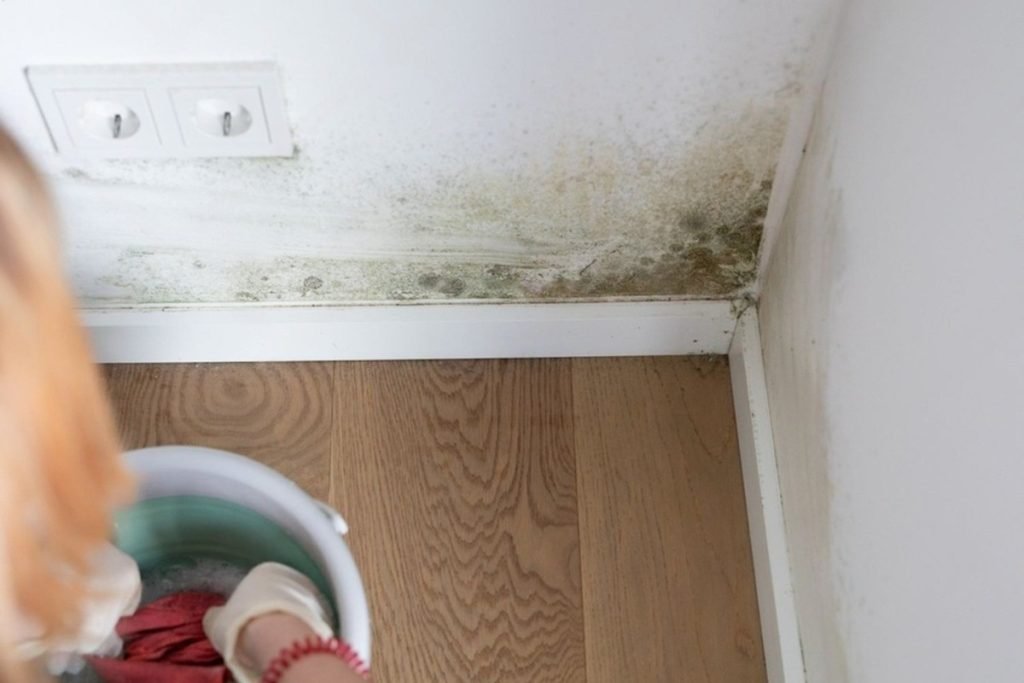
Water stains (generally brown, yellowish, or large spreading rings) are, by nature, the most visible signs of moisture problems. Water stains are often located near baseboards, ceilings, lower portions of the walls, and other areas of the structure. Even slight discolorations indicate that there is moisture in the wall behind the drywall.
The appearance of dark spots on walls or ceilings after they have been cleaned could indicate an active leak. Drywall will absorb moisture and distribute it horizontally and vertically; therefore, the area of damage could be larger than the visible surface.
4. Lifting or buckling floor
When wood or laminate flooring lifts, buckles, or swells, this is indicative of hidden water beneath the flooring. Several other floors could loosen (tile) or develop bubbles/separation (vinyl) because of hidden water underneath the floor. Pipe leaks, broken appliances, or moisture moving up from underneath the flooring may be the cause.
When a floor is warped or has soft spots, this indicates that the structural components that support the floor have lost some degree of strength. It is imperative to contact a professional restoration team immediately to prevent further damage to nearby floor joists or rooms from moisture.
5. Visible or hidden mold growth
Hidden water creates an ideal environment for mold to thrive. Mold grows rapidly in dark and damp areas. When mold is observed in corners, behind furniture, near baseboards, and/or window frames, it is often just a small portion of a much larger infestation hiding behind your walls.
Orlando’s humid climate expedites mold growth at a higher rate than most cities. In Orlando, mold can develop as early as 24–48 hours after the initiation of a pipe leak. Mold is very dangerous to children, seniors, and anyone who may have allergies or asthma, since spores can travel through the air, infecting anyone who breathes the air.
6. Noisy pipes or dripping sounds
Water damage is sometimes heard before being seen, and if you hear noises like dripping, trickling, and soft tapping coming from somewhere in your home while you are not using your sink or shower, chances are that there is movement of water within your home in a place it does not belong. These sounds typically happen overnight when there is little or no activity in a home.
If the sound appears to come from behind walls or under floors, there is likely a leak in a pipe or a loose valve connection is loose.
7. High humidity inside your home
The level of humidity in your home should stay relatively level; if your home has begun to feel “sticky” or is much more humid than normal, moisture has likely built up behind walls or flooring and begun to leak into your living space.
In addition, excess moisture provides an excellent breeding ground for mold, mildew, and bacteria. Water damage services in Orlando test the indoor humidity levels and will be able to identify where moisture is building within your home very quickly.
8. Drywall becomes soft, sagging, or crumbling
When drywall becomes wet, it weakens considerably; if you notice that your drywall has become soft to the touch, has sagged, or crumbles when touched, the area has probably been exposed to moisture for a long period of time and will need to be removed and replaced immediately.
Drywall that has sagged can also be a sign of a leak from the ceiling, likely due to a broken pipe, roof damage, or a condensation issue with the HVAC system.
FAQs About Water Damage Restoration
- How can I tell if I have water damage behind my walls?
Look for odors; musty odors, visible water stains, and/or warped surfaces indicate the presence of hidden water damage. A moisture meter or thermal imaging device will allow you to determine the presence of hidden water damage with a higher degree of certainty.
- Can hidden water damage lead to mold growth?
Yes. Mold can grow within 24–48 hours if moisture has accumulated behind walls or under the floor; this is particularly true due to the humidity levels found in Orlando.
- If I suspect I’m experiencing water damage behind my drywall, is it safe for me to remove the drywall myself?
No. DIY drywall removal may expose mold spores, creating more significant contamination. A qualified professional will conduct an assessment and safely remove damaged materials.
- What can cause water damage behind drywall?
Broken pipes, roof leaks, HVAC condensation, appliance malfunctions, and/or plumbing failures are common causes.
- When should I contact a restoration company?
Immediately; the sooner you call a restoration company, the less damage you will probably incur later. You will save money and prevent mold growth with quick action.
About United Water Restoration Group of Orlando
United Water Restoration Group of Orlando is a premier water damage restoration company in Orlando that provides emergency mitigation, repair, full-service restoration, and 24/7 rapid response to an emergency.
We perform water extraction, structural drying, mold remediation, leak detection, and complete property restoration. Our certified team of technicians uses advanced technology, proven techniques, and a collaborative approach to safely and efficiently restore both residential and commercial properties with minimal disruption. Contact us today to schedule a restoration service.